A Motorised Bedroom Blinds Example That Works

A motorised bedroom blinds example is most compelling when it solves the small frustrations that interrupt a good morning or a better night’s sleep. Picture a coastal primary bedroom with wide glass doors, soft linen furnishings, and early sunlight reaching the bed well before the alarm. At the touch of a wall switch, remote, or smart device, the blinds lower for privacy and darkness. Later, they rise to reveal the view and bring natural light back into the room.
This is not simply a convenience upgrade. In a well-designed bedroom, motorized blinds make light control feel considered, protect the room’s privacy, and support the calm, polished atmosphere homeowners want from a private retreat.
A motorised bedroom blinds example, room by room
Consider a bedroom with two large windows facing the morning sun and a smaller side window that overlooks a neighboring property. The strongest solution is often a custom dual-blind system: a light-filtering roller blind for daytime softness, paired with a blockout roller blind for nighttime privacy and sleep.
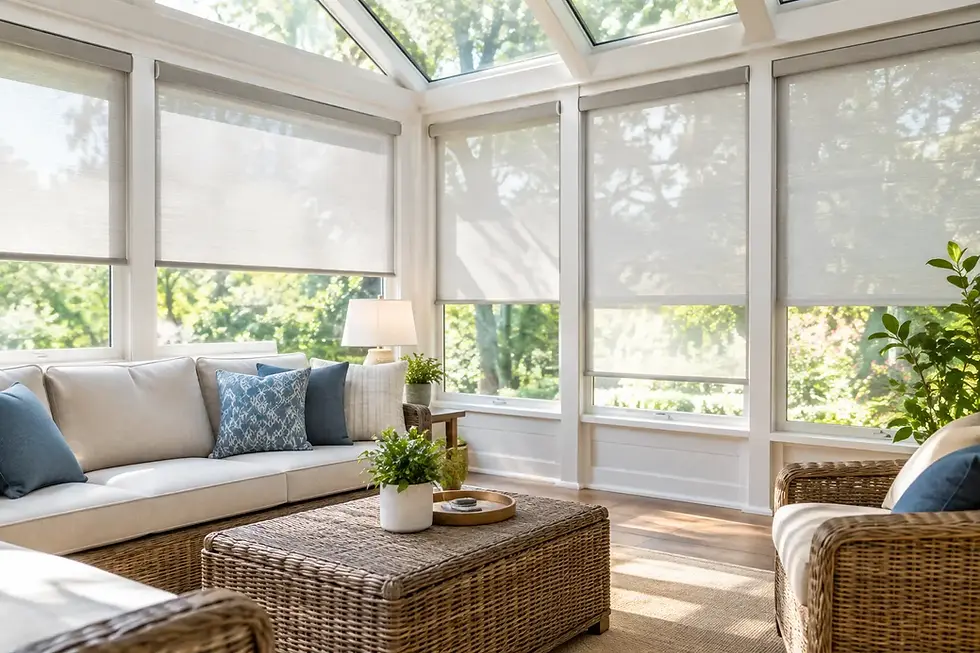
During the day, the light-filtering fabric can be lowered to reduce glare while keeping the room bright and connected to the outdoors. It gently diffuses harsh sunlight, helping furnishings, flooring, and artwork retain their finish over time. At night, the blockout blind creates the darker, more enclosed setting many homeowners prefer for sleeping.
Motorization changes how this system is used. Rather than adjusting each window individually, the blinds can be grouped so they move together. One command lowers the blockout blinds across the room before bed. Another opens the light-filtering layer in the morning without disturbing the room’s relaxed feel.
For the side window, a single motorized blockout blind may be enough. This keeps the design visually consistent while giving the homeowner immediate privacy when required. The result is a bedroom that feels composed from every angle, not a collection of separate window treatments added as an afterthought.
Why dual blinds suit many bedrooms
A single blind can be the right choice in some rooms, especially where privacy is not a concern or the window receives limited direct sun. But bedrooms often need different performance at different times of day. A translucent fabric is inviting in daylight, while a blockout fabric is more effective after dark.
A dual system provides both without compromising the look of the room. The fabrics can be selected in complementary tones, with understated hardware and a tailored fit that suits contemporary coastal homes, renovated family properties, and more traditional interiors alike.
The trade-off is that dual blinds require thoughtful planning. There must be enough space within or above the window recess, and the placement of each layer needs to allow smooth operation. This is where a professional measure and design consultation makes a visible difference.
The control option should suit the household
A handheld remote is a straightforward option for homeowners who want simple control from bed. Wall-mounted switches can suit a more permanent, integrated finish, particularly when blinds are being included in a renovation or new build. Smart-home control may appeal to those who want routines, such as raising the blinds at a set time each morning or lowering them at sunset.
The best choice depends on how the room is used. A guest bedroom may only need a remote. A primary suite with several large windows may benefit from grouped controls or automation. The aim is not to add technology for its own sake. It is to make the room more comfortable with less effort.
Start with the bedroom’s light and privacy needs
The most successful motorized bedroom blind design starts with the orientation of the home. East-facing rooms can receive bright, direct morning sun. West-facing rooms may hold heat late into the afternoon. Bedrooms facing a street, pool area, or nearby home may need privacy at times when natural light is still welcome.
Fabric selection should respond to these conditions. Blockout fabrics are ideal where darkness is the priority, but small light gaps can still occur around the sides of a roller blind depending on the installation style. If near-total darkness is essential, the window reveal, blind width, and mounting position should be assessed carefully before the product is specified.
Light-filtering fabrics vary considerably. Some offer a soft, open feel with gentle views outward, while others provide a denser level of daytime privacy. In bedrooms that overlook close neighbors, a more private light-filtering fabric is usually the better choice. In a room with a garden or ocean outlook, homeowners may prefer a fabric that preserves more of the view.
Color also deserves attention. Warm whites, natural stone shades, soft grays, and textured neutrals tend to sit comfortably within premium bedroom interiors. A blind should frame the room rather than dominate it. Darker fabrics can make a strong statement, but they may feel heavier in a small bedroom or reduce the sense of openness when lowered during the day.
Design details that create a premium finish
Motorized blinds are at their best when the operational details and visual details have been considered together. The blind should sit at the right height, clear window handles where necessary, and align neatly across adjoining windows. On larger glass openings, the fabric width and the number of blinds must be planned so the proportions feel deliberate.
Concealed cabling is often preferred in new builds and major renovations because it keeps the finish clean and refined. Battery-powered motorized blinds can be an excellent alternative where running electrical wiring is impractical. Both options have a place, and the right recommendation depends on the window location, access, and the level of integration desired.
Noise is another consideration in a bedroom. Quality motorized systems are designed for quiet, controlled movement, but product selection and professional installation matter. A blind that sits square, rolls evenly, and stops at the correct positions gives the room the composed finish expected in a high-end home.
For homeowners in coastal areas such as Byron Bay, Kingscliff, and Tweed Heads, fabric durability and sun exposure should be part of the conversation as well. Strong sunlight can be beautiful, but it places greater demands on materials. Custom internal blinds selected for the room’s conditions will perform better and retain their appearance longer than an off-the-shelf option chosen without a proper measure.
Professional installation protects the result
A motorized blind system involves more than choosing a fabric and a color. Accurate measuring determines the coverage, privacy, and visual alignment of the finished blinds. Motor positioning, power access, mounting surfaces, and control setup must all work together.
Professional installation also provides confidence that the blinds have been commissioned correctly. Limits are set so the fabric stops where it should. Grouped blinds are programmed to operate as intended. Controls are explained clearly, so the homeowner can use the system from day one rather than treating it as a feature that is more complicated than it needs to be.
Luxury Outdoor Blinds approaches internal motorized blinds as part of the home’s wider design and lifestyle. A consultation considers the space, the way the room is used, and the finish the homeowner wants to achieve. That level of planning is particularly valuable when bedroom blinds need to coordinate with shading in living areas, alfresco spaces, or other parts of a renovation.
When motorized bedroom blinds make the most sense
Motorization is especially worthwhile for tall windows, wide openings, difficult-to-reach windows, and rooms with multiple blinds that are used every day. It is also a strong choice for homeowners who value a tidy, cord-free appearance and consistent operation across the bedroom.
That said, manual blinds remain suitable for a small window that is easy to reach and rarely adjusted. The decision should reflect the room, not a one-size-fits-all upgrade. In a primary bedroom, where comfort, privacy, and daily routines matter most, motorization often earns its place quickly.
A well-planned bedroom should make waking up, winding down, and closing off the day feel effortless. Start by looking at the windows that affect your sleep and privacy most, then choose a blind solution designed to make that part of the home feel as considered as the rest of it.