
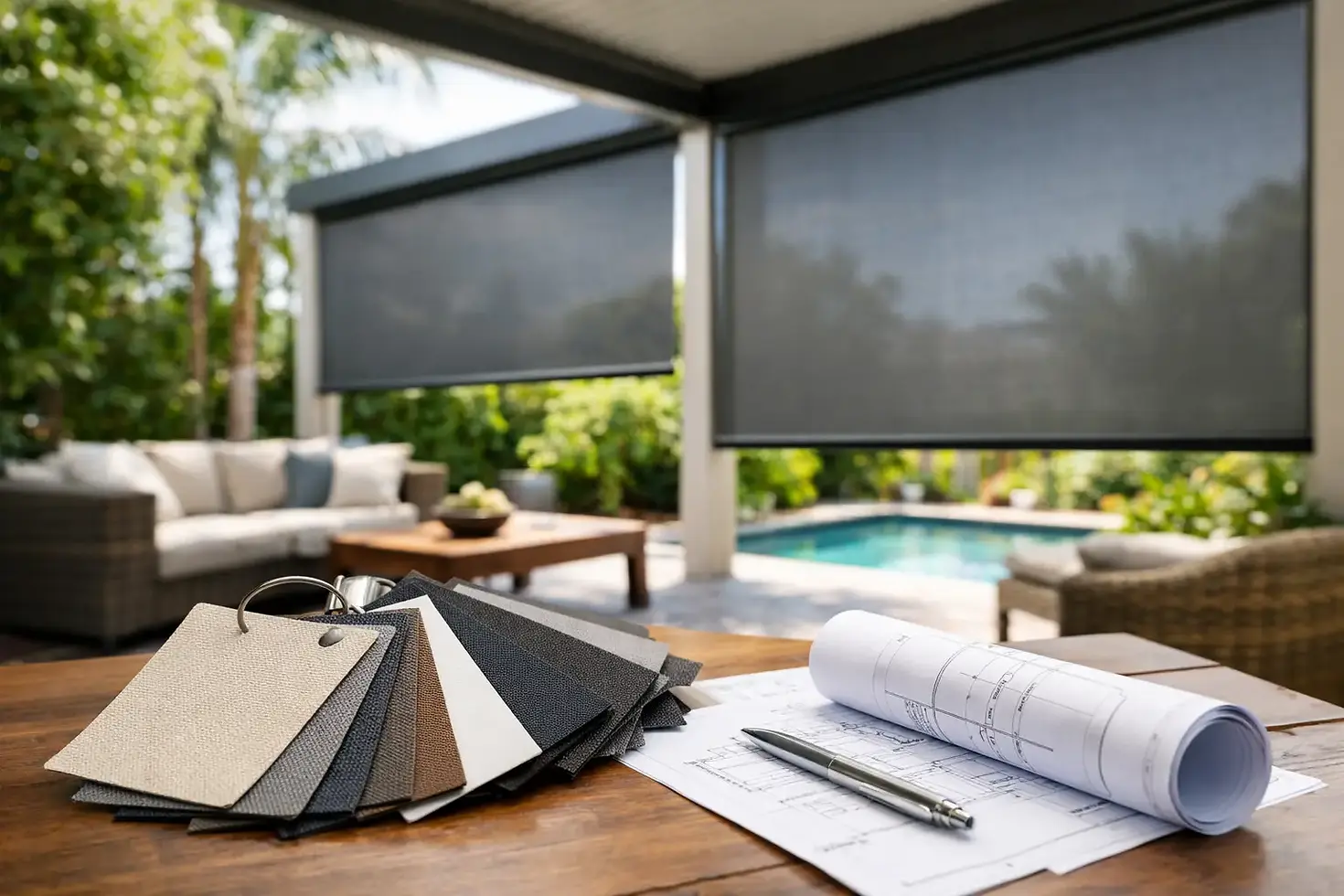
How to Choose Outdoor Blinds for Your Patio

A patio that looks inviting at 10 a.m. can become unusable by lunchtime when glare, heat, and coastal breezes take over. Knowing how to choose outdoor blinds starts with the way you want to live in the space - long lunches, quiet mornings, poolside afternoons, or relaxed evenings with friends.
The right system does more than add shade. It can define an alfresco area, improve privacy, reduce wind exposure, and make the transition from indoors to outdoors feel considered and complete. For a premium result, the blind, fabric, controls, and installation all need to suit your home and its conditions.
Start With the Problem You Want to Solve
Outdoor blinds are not a one-size-fits-all addition. Before selecting a style or fabric, stand in your patio at different times of day and notice what prevents you from using it. Is the western sun making the space too hot? Does wind blow napkins, cushions, and conversations off course? Are overlooking neighbors affecting privacy?
A clear priority helps shape every later decision. If harsh afternoon light is the issue, solar control and fabric openness matter most. If you live near the coast in Byron Bay, Kingscliff, or Burleigh Heads, wind performance and corrosion-resistant components deserve closer attention. If the goal is to create a more private entertaining room, coverage, side gaps, and sightlines become central to the design.
Many homeowners need a combination of benefits. That is where a custom solution earns its place. A well-designed outdoor blind system can soften glare while preserving a view, or provide wind protection without making the patio feel closed in.
How to Choose Outdoor Blinds That Suit Your Space
Begin with the structure around the opening. The width, height, posts, roofline, and available fixing points determine what can be installed cleanly and how the finished system will look. Large openings may call for multiple blinds rather than one oversized unit, particularly when you want flexible control over separate zones.
Also consider how the space connects to the rest of the home. A blind that sits neatly within an existing patio structure often creates the most architectural result. For freestanding decks, pergolas, and exposed entertaining areas, a consultant can assess whether additional support or a different shading solution will better suit the site.
The direction your patio faces is equally influential. East-facing areas tend to need early sun management, while west-facing spaces commonly require stronger protection from low, intense afternoon glare. North-facing patios may benefit from adjustable coverage across a longer portion of the day. South-facing areas can be less exposed to direct sun, but may still need privacy and wind control.
Do not choose based on a single sunny inspection. Look at the space when it is windy, when the sun is low, and when rain moves through. The conditions that make you retreat indoors are the conditions your new system should address.
Select the Right Blind System
For premium outdoor living spaces, guided blind systems are often chosen for their clean appearance and dependable performance. Zipscreen systems use a guided edge to hold the fabric securely within side channels, creating a refined finish with reduced gaps at the sides. They are particularly effective for patios and alfresco zones where wind, insects, glare, and privacy are all part of the brief.
A standard straight-drop design can suit more sheltered locations or smaller openings, especially where a simple, understated shading solution is preferred. The key is matching the system to exposure rather than selecting solely on appearance. A beautiful blind that is not designed for the wind conditions at your home will not deliver the comfort or longevity expected of a premium installation.
Retractable awnings and outdoor louvres can also be worth considering when the main issue is overhead sun rather than the sides of the patio. In many homes, the most effective design combines overhead shade with vertical protection. This gives you greater control as the sun changes position and makes the entertaining area more usable across seasons.
Choose a Fabric for Light, Privacy, and View
Fabric selection has a major effect on how your outdoor space feels. It changes the level of shade, the amount of outward visibility, the privacy available during the day, and the visual connection to your garden, pool, or coastal outlook.
Mesh fabrics are a popular option for homeowners who want to cut glare and heat while retaining a view. The openness of the weave determines how much light and visibility pass through. A more open fabric preserves more of the outlook but offers less daytime privacy and solar protection. A tighter weave provides stronger screening and shade, although it can make the space feel more enclosed.
Privacy also changes after dark. When lights are on inside the patio area, people outside may see more through a mesh fabric than you expect. If night privacy is a priority, discuss this specifically during the design consultation rather than assuming one fabric will perform the same way day and night.
Color deserves practical consideration as well as aesthetic attention. Darker fabrics can often improve outward visibility during daylight hours, while lighter tones may better complement pale timber, stone, and coastal architectural palettes. The best choice balances the facade, outdoor furniture, and the level of heat and glare control required.
Decide Between Manual and Motorized Operation
For a single small opening used occasionally, manual operation can be suitable. But for larger patios, multiple blinds, or a home designed around frequent entertaining, motorized operation offers a more polished experience. With the touch of a button, you can lower blinds as the afternoon sun moves across the deck, raise them for an open view, or prepare the patio before guests arrive.
Motorized systems are especially valuable when blinds are high, wide, or difficult to access. They encourage regular use because adjusting the space does not become a chore. Remote control, wall switches, and selected smart-home options can be considered depending on the system and your preferred level of control.
Convenience should not be the only reason to choose motorization. Consistent, smooth operation also helps protect a custom installation from unnecessary handling. Your consultant can recommend controls that suit how your household uses the space without adding complexity you will never use.
Look Beyond the Fabric and Hardware
An outdoor blind is exposed to sun, moisture, salt air, wind, and daily movement. Product quality matters, but so does how the system is measured, fixed, aligned, and finished. A professional site measure identifies subtle details that are easy to miss online or from a showroom sample: uneven surfaces, drainage paths, roof overhangs, post placement, doors that need clearance, and the direction of prevailing wind.
For exposed coastal homes, ask about materials and finishes suited to the local environment. Australian-made products and quality components can provide confidence that the system has been selected for demanding outdoor conditions, not simply for its appearance on installation day.
It is also wise to set realistic expectations. Outdoor blinds can significantly improve comfort and weather protection, but no fabric system should be treated as a substitute for a fully enclosed room. In severe weather, blinds should be operated in line with the manufacturer’s guidance. A qualified installer will explain how to use and care for the system so it continues to perform well.
Design for a Finished Outdoor Room
The strongest projects treat outdoor blinds as part of the overall design, not as an afterthought. Consider where the blind cassette will sit when raised, how the side channels align with posts, and whether the color should blend into the home or create a deliberate contrast. These details are what make a patio feel like a natural extension of the architecture.
Think about furniture placement too. Dining settings, lounges, outdoor kitchens, and heaters all influence where protection is most valuable. You may not need every opening covered. Sometimes one strategically positioned blind transforms the comfort of the entire area while keeping the best outlook open.
A design consultation turns these decisions into a plan tailored to your home. Luxury Outdoor Blinds can assess your patio, exposure, lifestyle priorities, and preferred finish to recommend a custom outdoor shading solution with professional installation.
The best choice is the one that makes you use your patio more often. When shade, privacy, wind control, and design work together, the outdoor area stops being weather-dependent and becomes part of everyday living.


