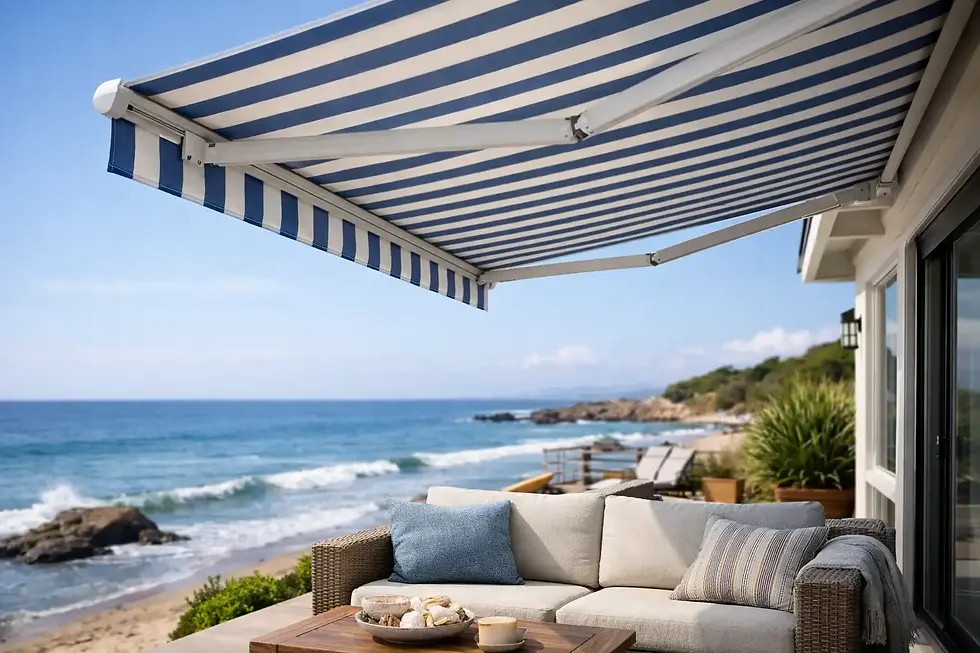
Best Byron Bay Awnings for Coastal Living
- Luxury Outdoor Blinds

- Aug 15
- 6 min read
A Byron Bay patio can look spectacular at 9 a.m. and feel unusable by lunch. Strong sun, shifting coastal breezes, salt air, and sudden showers all shape how an outdoor area performs. The best Byron Bay awnings do more than add shade. They turn a deck, courtyard, balcony, or alfresco zone into a more comfortable extension of the home - ready for relaxed mornings, long lunches, and effortless entertaining.
For design-conscious homeowners, the right result is rarely about selecting an awning from a catalog. It comes from matching the product, fabric, size, controls, and installation details to the way the space is used. A premium solution should look considered from inside and outside the home while delivering practical protection when conditions change.
What Makes the Best Byron Bay Awnings Different?
Coastal living asks more of an awning. Heat management matters, but so do wind exposure, the orientation of the home, the structure available for mounting, and the visual relationship between the awning and the architecture. A solution that is ideal for a sheltered courtyard may not be the right fit for an elevated deck facing afternoon winds.
The best installations begin with the sun path. West-facing entertaining areas generally need deeper coverage later in the day, while north-facing spaces often benefit from flexible shade that can be adjusted across seasons. A well-positioned retractable awning gives homeowners control: extend it when the space is exposed, then retract it to welcome winter light or protect the system when conditions are unsuitable.
Quality materials are equally important in this environment. Premium outdoor fabrics are selected for UV performance, color retention, and a refined finish. Strong frames, carefully engineered arms, secure brackets, and professional fixings all contribute to an awning that feels stable, operates smoothly, and complements a high-value home.
There is also a lifestyle difference. A beautifully integrated awning can reduce glare through adjoining glass, make outdoor dining more enjoyable, and help the patio feel like a purposeful room rather than a space used only when the weather is perfect.
Choose the Awning Style Around How You Live
There is no single answer to the “best” awning. The right choice depends on whether the priority is adaptable shade, permanent cover, sun control for a window, or a broader outdoor-room transformation.
Retractable awnings for flexible entertaining
Retractable awnings are a natural choice for alfresco dining areas, decks, and patios where homeowners want shade on demand without committing to a permanently shaded roofline. When extended, they provide generous overhead coverage. When retracted, they preserve open skies, natural light, and the clean architectural lines of the home.
This flexibility makes retractable awnings particularly effective for spaces used throughout the year. They can soften intense summer sun and reduce heat building up near doors and windows, then be drawn back when a brighter, more open setting is preferred.
For premium homes, motorization is often the defining upgrade. A motorized awning can be controlled at the touch of a button, making it easy to respond to changing sun and weather without interrupting a gathering. It is a small convenience that has a noticeable impact on how often an outdoor area is used.
Retractable systems do have a trade-off: they are designed for shade and light-weather protection, not for remaining extended through strong winds or severe conditions. A professional consultation should assess exposure honestly and recommend the appropriate operating approach for the site.
Fixed awnings for defined entrances and windows
Fixed awnings suit homeowners who want consistent protection over an entry, window, walkway, or smaller outdoor zone. Their permanent profile can add structure and character to the facade while reducing direct sunlight on glazing.
They are especially useful where shade is required at the same time every day or where a retractable system is not necessary. The key is proportion. An awning that is too small may have limited practical effect, while one that is too deep or visually heavy can overwhelm the elevation. Custom sizing and fabric selection keep the design balanced.
Folding-arm awnings for wider outdoor spaces
For larger patios and entertaining zones, folding-arm awnings can create broad, elegant shade without the need for posts at the front edge. That open footprint is valuable when preserving views, maintaining access around a pool, or allowing dining furniture to sit comfortably beneath the cover.
The absence of front posts gives the area a lighter, less enclosed feel. It also means the mounting wall and installation method must be assessed carefully. Premium performance depends on the building structure being suitable for the awning’s projection and width.
Motorization Makes Outdoor Living Easier
An outdoor shade solution should make the home easier to enjoy, not introduce another task to manage. Motorized operation is ideal for homeowners who use their entertaining space frequently or want a more polished, integrated experience.
With motorization, the awning can be extended before guests arrive, adjusted as the sun moves, and retracted quickly when it is time to close the space. It also supports a cleaner finish, removing the need for manual cranks in prominent areas.
Automation can be worth considering for particularly exposed locations. Weather-responsive controls can help protect a retractable awning when wind conditions increase, although every property should be assessed according to its individual conditions. Technology is helpful, but it does not replace sensible operation or professional advice.
Fabric and Color Need More Thought Than Most Homeowners Expect
Fabric is not merely a decorative decision. Its weave, opacity, color, and performance characteristics influence glare, heat, privacy, and the quality of light beneath the awning.
Lighter colors can create a bright, airy feel and may suit coastal palettes, while darker fabrics can offer stronger visual definition and help manage glare. The right answer depends on the surrounding finishes, the amount of reflected light from paving or water, and whether the outdoor area is viewed closely from interior living spaces.
A fabric that looks striking as a small sample may read very differently across a large awning. This is where a design-led measure-and-quote appointment adds value. Seeing the architecture, exterior colors, roofline, and adjoining landscaping allows for a more confident recommendation than choosing from images alone.
For coastal homes, durability should always sit alongside appearance. Select fabrics and components suited to outdoor conditions, and follow the recommended care routine. Regularly clearing leaves and debris, keeping the fabric dry before long periods of storage where possible, and arranging appropriate servicing will help preserve the finish and operation over time.
An Awning Is Only as Good as Its Installation
A premium awning can be undermined by poor placement or rushed installation. The mounting surface must be suitable, bracket positions need to be precise, and the pitch has to encourage water runoff while providing effective shade. Even small details, such as clearance above doors, the path of the awning arms, and access to electrical controls, affect the finished result.
Professional installation also creates a more refined visual outcome. Neat cable management, carefully aligned hardware, and an awning sized specifically for the space help the system feel intentional rather than added on. For homes in Byron Bay and surrounding coastal communities, local site knowledge is useful when considering exposure and the practical demands of an outdoor area.
Luxury Outdoor Blinds approaches this process through tailored consultation, custom recommendations, and professional installation. The aim is not simply to cover a patio. It is to create a space that feels more usable, more comfortable, and more connected to the home.
When an Awning Is Not the Complete Answer
Overhead shade is powerful, but it does not solve every outdoor comfort issue. If late-afternoon sun enters from the side, if privacy is limited, or if wind regularly sweeps across an alfresco area, an awning may work best as part of a broader outdoor shading plan.
Zipscreen outdoor blinds can provide vertical protection along open sides, helping manage sun, wind, and privacy while retaining a clean appearance. Outdoor louvres offer another option where homeowners want more permanent overhead architecture with adjustable light and ventilation. The best solution may combine elements, especially for a large entertaining zone that needs to perform across different seasons.
The practical question is not simply, “Which awning looks best?” It is, “What needs to change for this space to become part of everyday living?” Once that answer is clear, the right shade solution becomes far easier to specify.
A considered awning gives a Byron Bay home more than relief from the sun. It creates a reason to step outside more often, stay longer, and enjoy the outdoor area in the moments it might otherwise be left empty.