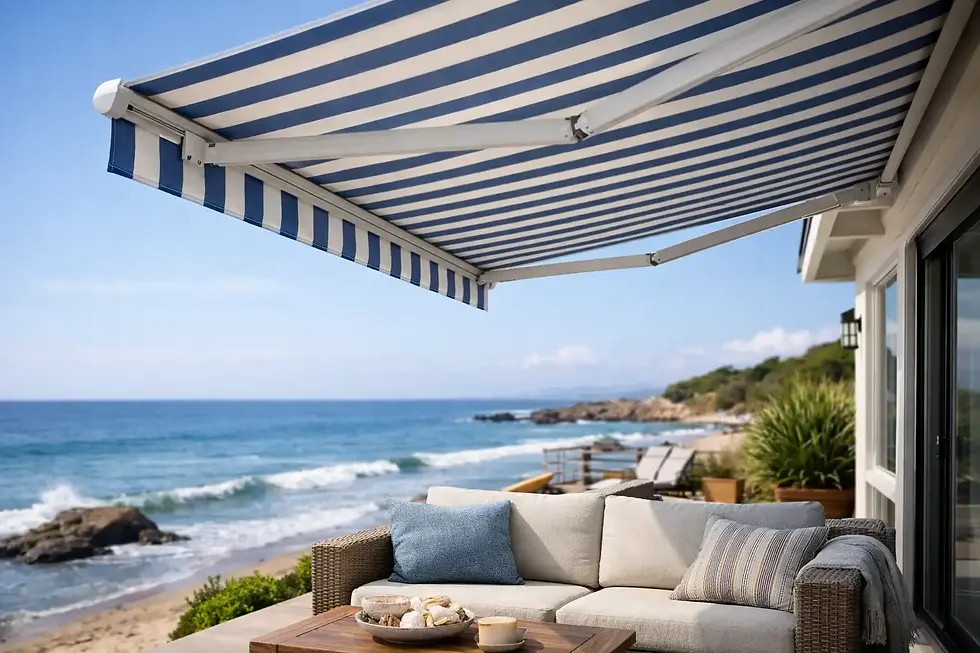
Outdoor Screens That Extend Your Living Space
- Luxury Outdoor Blinds

- 1 day ago
- 5 min read
A beautiful patio is only as useful as the conditions allow. When afternoon sun cuts across the dining table, coastal breezes disrupt a meal, or close neighbors limit privacy, outdoor screens turn an exposed area into a place you can genuinely use. The right system brings indoor comfort outdoors while preserving the open feel that makes an alfresco space special.
For homeowners who have invested in a pool, patio, deck, or covered entertaining area, this is not simply an accessory. It is a design decision that can increase usable living space, improve the way your home presents, and make spontaneous outdoor entertaining far more enjoyable.
Why outdoor screens change how a patio feels
An outdoor area does not need four solid walls to feel protected. Professionally selected exterior screens create a flexible boundary between your home and the elements. Lower them when the sun is intense, the wind picks up, or you want privacy. Raise them again when you want uninterrupted views and fresh air.
That flexibility is what makes the difference. Fixed structures can make an outdoor room feel enclosed, while retractable screens allow the space to respond to the moment. A quiet morning coffee, a family lunch, and an evening gathering may all call for different levels of shade, airflow, and enclosure.
In coastal and regional locations, the benefit is especially clear. Outdoor living is part of the lifestyle, but glare, wind, insects, humidity, and changing weather can make a patio feel unpredictable. A tailored screen system helps make the area more dependable without sacrificing its connection to the garden, pool, or view.
The comfort benefits that matter every day
The most successful outdoor screen installations solve several practical problems at once. Shade is often the first consideration, particularly on west-facing patios where late-afternoon heat can make entertaining uncomfortable. Quality screen fabrics filter harsh sunlight while maintaining a softer natural light across the space.
Privacy is another major advantage. A screen can soften sightlines from adjoining properties, roads, or neighboring balconies without the visual weight of a permanent wall. This is particularly valuable in homes where a pool, dining area, or lounge space sits close to a boundary.
Wind protection can also change the way a patio performs. Screens will not turn every exposed deck into a completely sealed room, and no product should be expected to withstand conditions beyond its intended use. However, the right guided system can reduce uncomfortable gusts and help keep lightweight table settings, napkins, and conversations in place.
For many households, insect control is the quiet benefit that gets noticed most often. Fine mesh options can make evenings outside more relaxing, especially around food and lighting. The exact level of visibility, airflow, and insect protection depends on the fabric selected, which is why product choice should follow the way you use the space rather than a one-size-fits-all formula.
Choosing outdoor screens for your home
A premium result begins with understanding the structure, orientation, and purpose of your outdoor area. The best solution for a covered poolside lounge may be different from the best option for a narrow balcony, a large entertaining pavilion, or a patio exposed to driving rain.
Guided Zipscreen systems for a clean finish
Guided outdoor screen systems, including Zipscreen-style solutions, are a popular choice for homeowners who want a streamlined appearance and reliable edge retention. The fabric is secured within side channels, creating a neat, taut finish and helping minimize gaps along the sides.
This makes guided screens well suited to larger openings and spaces where wind control, insect reduction, and a refined architectural look are priorities. When retracted, the system sits discreetly above the opening. When lowered, it creates a polished enclosure that feels intentional rather than temporary.
Motorization adds another level of convenience. With the touch of a button, you can adjust a screen as the sun moves or prepare the patio before guests arrive. For homes with multiple openings, motorized operation makes it easier to use the system as it was designed to be used, rather than leaving screens up because manual adjustment feels inconvenient.
Fabric selection is about more than color
Fabric has a major effect on comfort and appearance. Openness, weave, color, and density all influence the amount of sunlight filtered, the level of daytime privacy, and how clearly you can see through the screen from inside.
Darker fabrics often provide clearer outward views and reduce glare effectively, while lighter fabrics can create a brighter visual effect and complement pale exterior palettes. Neither is automatically better. If preserving a garden or ocean view is essential, visibility may lead the decision. If a space is heavily exposed to late sun, heat and glare reduction may carry more weight.
Color should also be considered in relation to your home’s architecture. Screens can blend into existing trim, complement exterior cladding, or provide subtle contrast around an entertaining zone. A considered finish helps the system look like part of the original design rather than an addition made after the fact.
Manual or motorized operation
Manual screens can suit smaller, less frequently used openings. They offer a straightforward solution where the screen will be adjusted occasionally and access is easy. Motorized systems are often the stronger choice for larger installations, high openings, or homes where everyday convenience is a priority.
The decision is not only about luxury. A motorized screen is more likely to be lowered at the right time, protecting furniture and making the area comfortable before heat builds. It is also easier to coordinate several screens around one entertaining area, creating a consistent result in seconds.
Design for weather, not just the floor plan
A screen should be specified for its actual environment. Orientation, opening width, roof structure, prevailing wind, exposure to salt air, and local weather patterns all affect what is appropriate. In coastal settings, material quality and professional installation matter because components are exposed to moisture, sun, and airborne salt over time.
This is where a measure-and-quote consultation adds real value. An experienced consultant can assess fixing points, identify likely pressure areas, discuss fabric performance, and recommend a configuration that complements the architecture. The goal is not to force a standard product into an opening. It is to create a tailored solution that looks refined and performs as intended.
Professional installation is equally important. Premium outdoor screens need accurate measurements, secure mounting, correctly aligned guides, and careful commissioning. Small inaccuracies can affect operation, appearance, and long-term performance. A custom-installed system should move smoothly, sit squarely, and feel integrated with the home.
Outdoor screens and property presentation
Outdoor improvements are often judged by the amount of lifestyle they appear to create. A patio with comfortable shade, privacy, and weather protection reads as an additional living zone rather than an area used only on perfect days. That can make a home feel larger, more complete, and better prepared for entertaining.
The visual benefit is just as significant. Clean-lined screens can frame an outdoor kitchen, define a lounge area, or give a covered deck a finished architectural edge. When they are selected to suit the home, they support the overall design instead of competing with it.
Luxury Outdoor Blinds approaches this process as a considered upgrade to the way you live at home. Australian-made products, design-led recommendations, and professional installation help ensure the finished space feels as good in daily use as it looks when guests arrive.
A considered investment in outdoor living
Before choosing a system, spend time in the area at different points of the day. Notice where the sun lands, which direction wind enters, when privacy feels limited, and how you want the space to function. Those observations will lead to a better screen selection than choosing solely from a color sample or product photo.
The best outdoor screen is the one that lets your patio work harder without making it feel closed in. With the right design, your favorite place to relax, dine, and entertain can remain comfortable long after the weather would normally send everyone inside.