How to Weatherproof Outdoor Entertaining Areas
- Luxury Outdoor Blinds

- 7 days ago
- 5 min read
A beautiful alfresco area should not sit unused because the afternoon sun is too harsh, a coastal breeze picks up, or a light shower interrupts lunch. Knowing how to weatherproof outdoor entertaining areas means planning for the conditions that actually affect your home, then selecting refined solutions that preserve the open-air feel.
For homeowners across coastal and regional areas, weather protection is rarely about closing a space in completely. It is about creating control. The right combination of shade, screens, ventilation, and considered finishes can turn a patio, deck, or poolside zone into a comfortable extension of the home.
Start With the Weather Your Space Actually Gets
Every outdoor area has its own exposure. A north-facing patio may need serious protection from heat and glare, while a western deck can become uncomfortable late in the day. Homes near the coast may also contend with changing winds, salt air, and rain that arrives at an angle rather than straight down.
Before choosing any product, spend time observing the space. Notice where sunlight falls during the hours you entertain most, where wind enters, and whether rain reaches furniture or doorways. Consider privacy as well. A neighboring upper-level window or a close boundary can change how relaxed a space feels, even when the weather is perfect.
This assessment should shape the design. Installing a single overhead cover may solve direct sun but do little for low-angle glare, crosswinds, or privacy. Weatherproofing works best when each side of the entertaining area is considered, not just the roofline.
How to Weatherproof Outdoor Entertaining Areas With Layered Protection
The most successful outdoor rooms use layers rather than relying on one fixed solution. Overhead shade manages heat and rain from above. Vertical screens address low sun, wind, privacy, and drifting rain from the sides. Adjustable elements allow the area to respond as conditions change through the day.
Add overhead cover for shade and rain relief
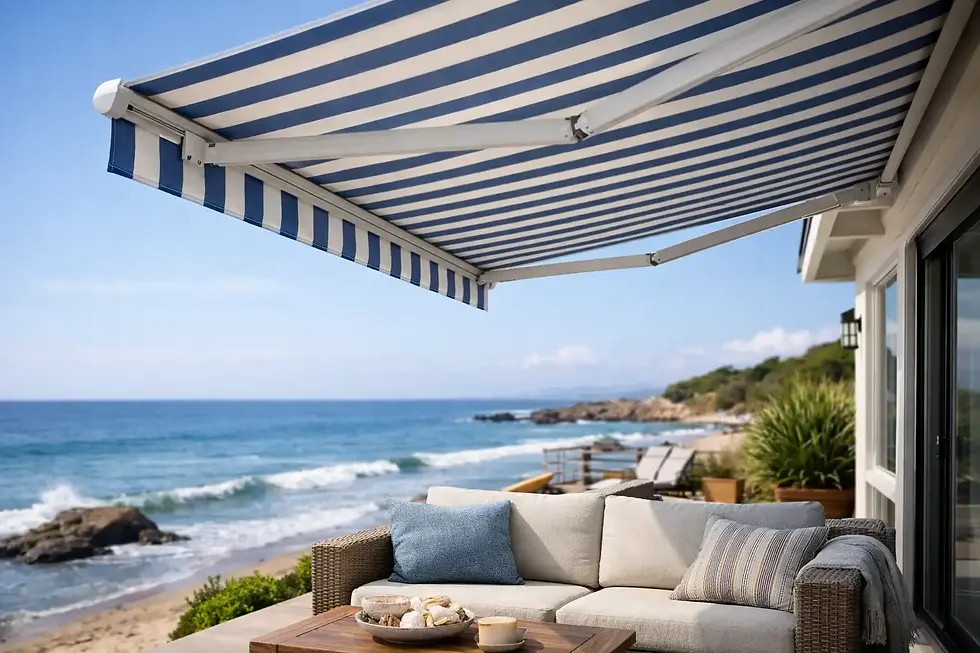
A retractable awning is an elegant option when flexibility matters. Extended, it creates generous shade for dining or lounging. Retracted, it restores open sky and natural light when the weather is mild. It suits spaces where a permanent roof would feel too heavy or block light from adjoining interiors.
For a more architectural result, outdoor louvres offer control over sun and ventilation overhead. Adjustable blades can be angled to filter sunlight, encourage airflow, or provide rain protection when conditions shift. They work particularly well for homeowners who want a structured outdoor living zone that feels intentional from every viewpoint.
The best overhead choice depends on your home’s orientation, structural layout, and how you use the space. An experienced design consultant can identify whether a retractable solution, louvre system, or existing patio roof with added side protection will deliver the strongest result.
Use outdoor blinds to stop wind and low sun
Outdoor blinds are often the element that changes a covered patio from occasionally pleasant to genuinely usable. They block low-angle sun that an awning or roof cannot reach, reduce uncomfortable gusts, and help protect furniture, flooring, and doors from wind-driven rain.
Premium outdoor blinds also create a more defined entertaining zone without making it feel closed off. Choose a fabric that softens glare while maintaining outward views, especially if your patio looks toward a garden, pool, or coastal outlook. When privacy is a priority, the right screen fabric can limit overlooking during the day while keeping the overall design light and refined.
For areas exposed to prevailing winds, a guided system such as Zipscreen is particularly effective. The fabric runs within side channels, creating a cleaner edge and more secure coverage than a loose, traditional blind. This makes a significant difference on open decks, elevated patios, and homes where breezes are part of daily life.
Keep airflow in the plan
Weatherproof does not have to mean airtight. In warm climates, a fully enclosed outdoor area can trap heat when all screens remain down. The advantage of motorized blinds and adjustable louvres is the ability to make small changes as the temperature, breeze, and sunlight shift.
For example, lower the western blind before late-afternoon glare reaches the table, while leaving another side open to catch a cooling breeze. During a light shower, close the weather-facing screen while maintaining ventilation on the protected side. This level of control helps the space feel comfortable rather than sealed in.
Choose Materials That Suit Coastal Conditions
Coastal homes need more than attractive finishes. Salt air, moisture, UV exposure, and wind can place ongoing demands on outdoor fittings. Selecting Australian-made, professionally specified products gives you a stronger foundation for long-term performance in these conditions.
Look beyond the fabric or frame color. The quality of hardware, guide channels, fasteners, motor components, and installation details all influence how an outdoor blind or shading system performs over time. A premium system should look considered when open and closed, operate smoothly, and be designed for the demands of its location.
Fabric selection matters, too. A darker screen fabric can often provide a clearer view outward in bright conditions, while lighter tones may suit a softer architectural palette and can reflect more heat. There is no universal answer. The right choice depends on the home’s exterior colors, the amount of direct sun, desired privacy, and how much view retention matters to you.
Make Motorization Part of Everyday Entertaining
Manual systems can work well in smaller, sheltered spaces. But when a patio includes multiple blinds, an awning, or adjustable louvres, motorization brings a level of convenience that changes how often the protection is used.
Instead of leaving blinds up because operating them feels like a task, you can adjust the environment in moments. Lower screens before guests arrive, extend the awning as the sun moves, or create privacy for an evening gathering without interrupting the conversation. Motorized operation is particularly valuable for wide openings, elevated blinds, and larger entertaining zones.
The visual benefit is equally compelling. A coordinated, custom-installed system keeps the lines of the outdoor area clean and avoids the clutter of temporary shade solutions, loose coverings, or mismatched furniture covers. The result feels like a true outdoor room, designed to complement the architecture of the home.
Do Not Forget the Details That Protect Comfort
Weatherproofing is not limited to blinds and roofs. Thoughtful supporting choices help the area perform better across the seasons. Position seating away from the most exposed edge where possible, and use outdoor-rated furniture and cushions that can handle humidity and occasional moisture. Ensure drainage around the patio is working properly so water does not pool near thresholds or under furniture.
Lighting also deserves attention. Warm, well-placed lighting extends the usable hours of the space after sunset, while dimmable fittings help preserve a relaxed atmosphere. If you are installing a new patio cover or louvre roof, plan lighting, heating, and power access early so cables and fittings can be integrated neatly rather than added as an afterthought.
For homes with sliding or stacking doors, consider how outdoor blinds will sit in relation to access points. A weather solution should improve the transition between indoors and out, not create an obstacle at the doorway. Professional measure-and-quote appointments are valuable here because small clearances and fixing points can affect both the finish and day-to-day usability.
Design for Flexibility, Not a Single Forecast
The goal is not to make your entertaining area suitable only for the hottest day or the wettest afternoon. It is to create a space that adapts. Open it wide for a clear morning breakfast, filter harsh midday light, block a gusty wind during afternoon drinks, and add privacy as evening arrives.
Luxury Outdoor Blinds approaches this through custom recommendations and professional installation, helping homeowners create outdoor areas that look exceptional while delivering practical, lasting protection. A tailored design respects the architecture, exposure, and lifestyle of the people using it.
The best place to begin is with the moment you want to enjoy more often: a long lunch that runs into the afternoon, a family dinner during a summer shower, or a quiet coffee outside when the wind is up. Design the weather protection around that moment, and your outdoor area becomes one of the most valuable living spaces in the home.