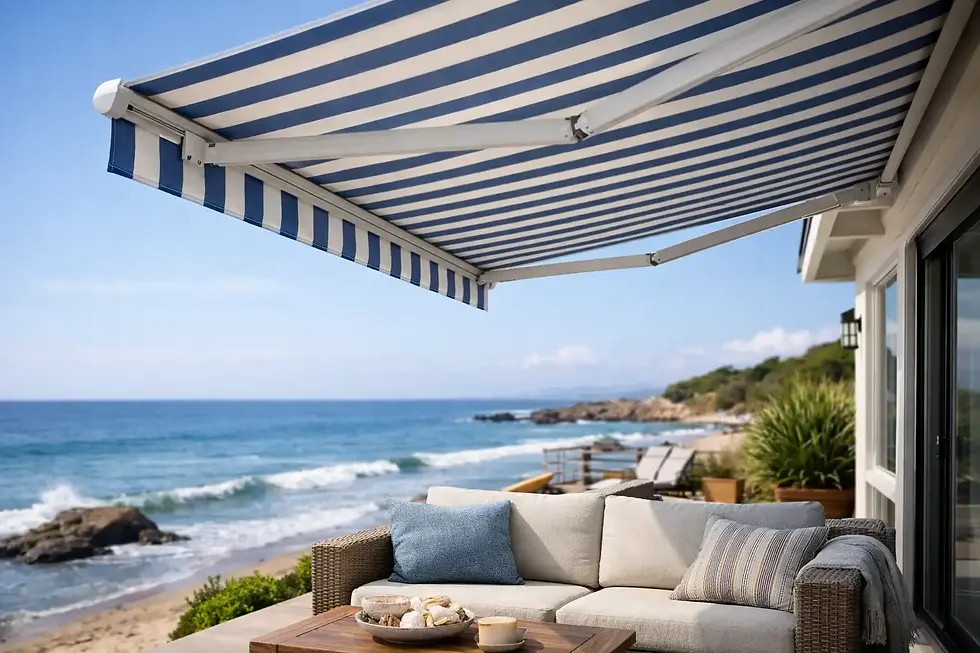
Motorised Awning Buying Guide for Better Patios
- Luxury Outdoor Blinds

- 2 hours ago
- 6 min read
A patio that is too hot at lunch, too bright in the afternoon, or unusable when a light shower arrives is not truly part of the home. This motorised awning buying guide is designed for homeowners who want to turn that underused edge of the house into a more comfortable place to relax, dine, and entertain. The right awning creates shade on demand, softens glare through internal rooms, and gives your outdoor area a more finished, architectural feel.
A motorised awning is not a one-size-fits-all purchase. Its performance depends on your home’s orientation, the size and purpose of the space, local weather exposure, and the quality of the fabric, frame, motor, and installation. Choosing well means looking beyond appearance and selecting a solution that will feel effortless to use for years.
Start With How You Want to Use the Space
The best place to begin is not with fabric samples or frame colors. It is with the lifestyle you want the awning to support. A family dining area may need broad, reliable shade during the hottest part of the day. A poolside terrace may need protection from intense western sun. An alfresco kitchen might benefit from shade that can be extended while entertaining, then retracted to enjoy open skies after dark.
Think about the times your patio is currently avoided. Is the issue morning glare, heat from a low afternoon sun, or a lack of comfort during light rain? An awning is particularly effective for overhead sun and glare, but it is not intended to replace a fully weatherproof roof. If wind-driven rain, persistent wind, or privacy are your main concerns, a combined design with outdoor blinds or a Zip screen system may offer better protection around the sides of the area.
This is where a design-led consultation adds real value. A professional can assess sun paths, access, fixing points, rooflines, and how the awning will sit alongside existing doors, windows, lighting, fans, and landscaping.
Choose the Right Awning Style
Retractable awnings are popular because they provide flexibility. Extend the awning when you need shade, then retract it to restore sunlight and protect the fabric when it is not in use. For many premium homes, this ability to adjust the environment is the appeal: the outdoor area feels open when conditions are pleasant and sheltered when the sun becomes too strong.
Folding Arm Awnings for Open-Plan Living
Folding arm awnings extend outward from a wall using articulated arms beneath the fabric. With no front posts interrupting the space, they suit patios, decks, balconies, and outdoor dining areas where clear access and an uncluttered view matter.
They are a strong choice when you want to shade an existing terrace without changing the structure of the home. The projection, width, mounting height, and pitch all need to be designed carefully. A shallow pitch may look sleek, but a steeper angle can improve shade when the sun sits lower in the sky and help water run off during a brief shower.
Cassette Protection for a Refined Finish
A premium retractable awning can be specified with a cassette that encloses the fabric and arms when retracted. This provides a cleaner visual finish while shielding key components from dust, salt air, leaves, and general weather exposure.
For coastal homes around Byron Bay, Kingscliff, Burleigh Heads, and the Tweed region, that added protection is especially worthwhile. Salt-laden air and strong sun can be demanding on outdoor products. A well-designed cassette system helps preserve the appearance of the awning while supporting long-term performance.
The Motor Is More Than a Convenience Feature
Motorization is what makes a retractable awning feel like part of daily living rather than an occasional accessory. Instead of manually winding a large span of fabric in and out, you can adjust shade with a wall switch, remote, or smart-home control. It encourages regular use because the process is immediate.
A quality motor should operate smoothly and quietly, with enough capacity for the size and weight of the awning. The control system should also suit the way you live. Some homeowners prefer a simple remote near the outdoor dining table. Others want the awning integrated with home automation so it can be controlled alongside lighting, blinds, and other outdoor features.
Consider Wind Sensors and Smart Protection
An awning should always be retracted in strong winds. This is not just a recommendation. Wind can place significant force on the fabric, arms, brackets, and wall fixings.
A wind sensor can automatically retract the awning when gusts reach a set threshold, helping protect the installation when you are away or busy inside. It is a valuable feature for exposed sites and holiday properties, although no sensor can eliminate the need for sensible use. If severe weather is forecast, retract the awning and leave it safely closed.
Sun sensors can also extend or retract an awning according to sunlight levels. They may be useful for reducing heat and glare through large glass doors, but the setting needs to reflect your household routine. Automatic functions should make the awning more useful, not have it moving when you are trying to enjoy the area.
Fabric Selection Sets the Mood and Performance
Awning fabric has a practical role and a design role. It controls shade, filters light, affects heat beneath the awning, and becomes a prominent element of the exterior facade. The best choice complements your home while meeting the demands of the location.
Look for high-quality outdoor fabric engineered for UV resistance, color retention, and everyday weather exposure. A dense, well-finished fabric will generally provide stronger shade and a more premium drape than a lightweight alternative. The fabric also needs to work with the awning’s overall span and projection so it remains properly tensioned when extended.
Color deserves careful thought. Lighter tones can make an alfresco space feel bright and airy, while darker shades can reduce glare more effectively and create a more intimate entertaining zone. Mid-tone neutrals often suit contemporary coastal architecture because they balance reflected light with a relaxed visual finish. The right answer depends on your facade color, flooring, furniture, and the amount of sun the area receives.
Check the Structure Behind the Awning
A beautiful awning is only as good as the structure supporting it. The installer must assess the wall or beam where the brackets will be fixed, including the material, condition, and load-bearing capacity. Brick, rendered masonry, timber framing, steel, and certain cladding systems each require a different approach.
Do not assume an existing fascia, eave, or decorative beam can carry the loads involved. A professionally installed system is designed around secure fixings, correct bracket placement, appropriate electrical connection, and accurate alignment. This matters even more with wide awnings, deep projections, or homes exposed to coastal wind.
The installation should also account for door clearances, gutter lines, downpipes, exterior lights, and opening windows. Small details have a large impact. An awning that sits at the correct height and pitch will look integrated with the home rather than added as an afterthought.
Match the Awning to Your Climate
Motorised awnings perform best when their strengths are matched to local conditions. In sunny coastal and regional locations, they can significantly improve daytime comfort by shading paving, outdoor furniture, and glazing. Reduced direct sun can also help moderate heat entering adjacent rooms.
However, an awning is a retractable shade system, not a permanent roof. It should be retracted during high winds, storms, and periods of heavy rain. If your area is frequently exposed to wind from the side, consider whether outdoor blinds, fixed louvres, or a layered outdoor solution would better meet your needs.
For many homes, the most successful result combines products rather than asking one system to solve every condition. An awning provides flexible overhead shade, while motorised outdoor blinds can add privacy, glare control, and side protection. The result is a more adaptable alfresco zone that supports entertaining across more of the year.
Prioritize Custom Design and Professional Installation
Standard sizing can leave awkward gaps, poor coverage, or proportions that do not suit the architecture. A custom-made awning allows the width, projection, frame finish, fabric, controls, and mounting method to be selected for your specific home.
This is particularly valuable when the outdoor area has unusual dimensions, split-level paving, a sloping site, large sliding doors, or a detailed facade. The goal is not simply to attach shade to a wall. It is to create a considered extension of the home that improves the way the space looks and functions.
Luxury Outdoor Blinds approaches this process through tailored consultation, premium Australian-made solutions, and professional installation. The focus is on creating outdoor shade that feels effortless to operate and right for the home from every angle.
Questions to Ask Before You Commit
Before choosing your system, ask how much usable shade it will provide at the times you need it most, how it should be operated in changing weather, and what protection the cassette offers when retracted. Confirm the motor and control options, the fabric’s suitability for UV exposure, and how the installer will assess structural fixing points.
Also ask how the awning will coordinate with other planned improvements. If you are considering outdoor blinds, landscaping, a new deck, lighting, or an outdoor kitchen, designing these elements together will usually deliver a more polished result than adding them one at a time.
A motorised awning should make your patio easier to enjoy, not add another task to your home. Select a custom-designed, professionally installed system that suits your sun, your architecture, and the way you entertain, and the area beyond your doors can become one of the most inviting spaces in the house.