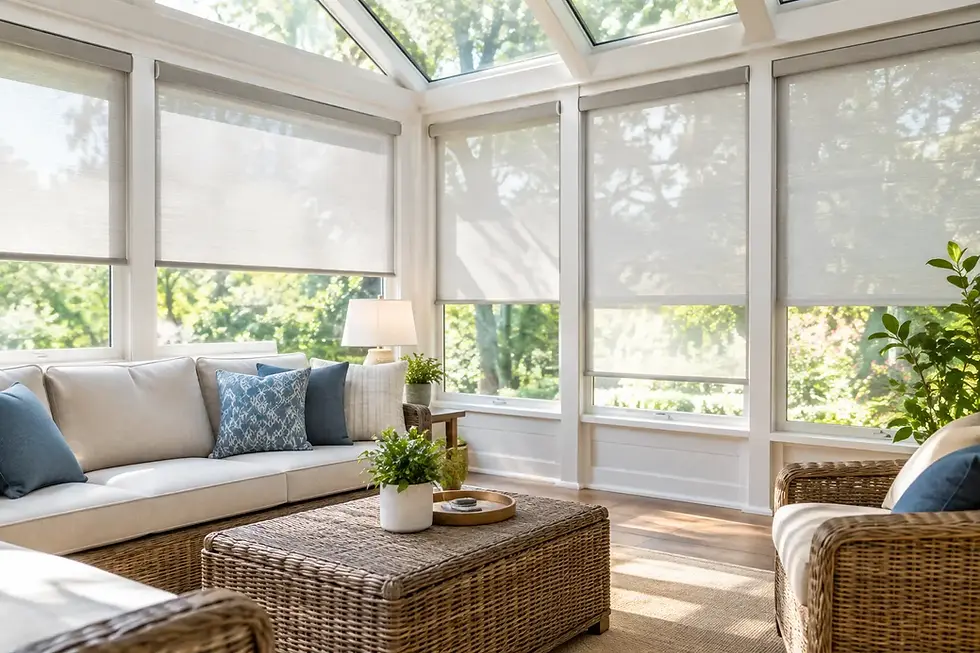
Roller Blinds That Refine Your Living Spaces

A room can have beautiful finishes, generous windows, and a considered layout, yet still feel exposed at the wrong time of day. Harsh western sun, overlooked bedrooms, television glare, and fading furnishings all change how a space performs. Roller blinds provide a clean, architectural answer: precise light control that supports the way you actually live.
For design-conscious homeowners, the appeal is not simply covering a window. A professionally selected roller blind can soften a room, protect interiors, improve privacy, and preserve the open feeling that makes large windows so desirable. The key is choosing a system, fabric, and control method that suit the room rather than taking a one-size-fits-all approach.
Why Roller Blinds Work in Modern Homes
Roller blinds are defined by their simplicity. The fabric rolls neatly onto a tube above the window, creating a streamlined finish with minimal visual bulk. When raised, they sit compactly at the top of the opening. When lowered, they create a calm, uninterrupted surface that suits contemporary, coastal, and classic interiors alike.
That clean profile makes them particularly effective in homes with wide glass doors, picture windows, and open-plan living areas. Rather than competing with joinery, views, or architectural details, they frame them. Fabric selection then determines how the blind performs, from filtering glare without losing daylight to creating near-total darkness for rest.
The trade-off is that roller blinds are intentionally pared back. If you want the softness and decorative fullness of drapery, they may be best paired with curtains rather than expected to provide the same effect on their own. For homeowners who value crisp lines and straightforward control, however, they are difficult to surpass.
Start With How Each Room Is Used
The best internal blind plan is rarely identical throughout the house. Living rooms, bedrooms, media spaces, bathrooms, and home offices all ask different things of their window coverings. Assessing the light, privacy, and daily routine in each room leads to a more polished result than selecting one fabric for every window.
Living and entertaining areas
In a living room or kitchen, the goal is often glare reduction rather than total darkness. Screen fabrics are a strong option because they filter sunlight and reduce heat while preserving a degree of daytime visibility outward. This matters in homes designed around garden, pool, coastal, or hinterland views.
Openness depends on the fabric's weave. A more open weave retains more of the view and daylight but offers less daytime privacy and sun control. A tighter weave provides greater protection and privacy, though the outlook will feel more subdued. A design consultant can help balance those priorities according to the window orientation and how the room is used.
Bedrooms and private spaces
Bedrooms usually benefit from greater privacy and stronger light blocking. Blockout roller blinds provide a more restful setting for early mornings, shift work, children's rooms, and guest spaces. They also protect furnishings from intense sun exposure.
For maximum flexibility, consider a dual blind configuration. A sunscreen blind can remain down during the day to manage glare and maintain a connection to the outside, while a blockout blind is used at night. This layered approach gives a bedroom the practical performance of two treatments without making the window feel overworked.
Media rooms and home offices
A television room needs reliable glare control, particularly when large windows face the afternoon sun. Blockout fabrics are often the most effective choice, although side light can still enter around the edges of a standard blind. Where light control is critical, a recessed installation or carefully considered bracket placement can make a noticeable difference.
For a home office, it depends on the screen position and working hours. Sunscreen fabric can reduce reflective glare while keeping the room bright enough to feel productive. If video calls are common, a neutral fabric tone can also create a calmer, more flattering visual background than bare glass and direct sunlight.
Choosing the Right Roller Blind Fabric
Fabric is where a roller blind moves from a simple window covering to a tailored interior feature. It affects light, privacy, temperature, texture, and the overall character of the room. The right choice should complement the home's finishes, but performance should lead the decision.
Sunscreen fabrics are ideal where filtered light and daytime views matter most. They are well suited to living spaces, kitchens, and areas that receive sustained sun. They do not offer full privacy at night when interior lights are on, so they are generally not the only solution for a bedroom or street-facing room.
Translucent fabrics diffuse daylight and offer more privacy than sunscreen options, creating an even, gentle glow. They suit rooms where you want natural light without a clear view in or out. Blockout fabrics are the answer when privacy and darkness take priority, although no standard roller blind can promise complete darkness if light can enter around the sides, top, or bottom.
Color deserves careful consideration as well. Light neutral tones can make a room feel expansive and work beautifully with coastal and contemporary palettes. Darker fabrics can add definition and may improve outward visibility through certain screen fabrics during daylight. The best result comes from viewing real samples against the room's natural light, flooring, paint, and window frames.
Manual or Motorized Roller Blinds?
Manual roller blinds remain a practical option for smaller windows and spaces where adjustments are occasional. They are simple, tidy, and effective when professionally measured and installed.
Motorization becomes especially valuable across large windows, tall openings, multiple blinds, or hard-to-reach glass. With the touch of a remote, wall control, or compatible smart-home system, homeowners can lower blinds before the afternoon heat builds, raise them for morning light, or adjust an entire living zone before guests arrive.
The luxury is not only convenience. Motorized roller blinds encourage consistent use, which means better day-to-day control over comfort, privacy, and UV exposure. They also remove the need for operating chains in family spaces, creating a cleaner finish around the window.
It does require planning. Power access, window layout, and preferred controls should be considered early in a renovation or new build. Battery-operated options can be suitable in some settings, while wired systems may be preferred for larger, permanent installations. A professional consultation helps determine which approach fits the home and avoids visible compromises later.
The Difference Professional Installation Makes
A roller blind's appearance depends heavily on its fit. Even premium fabric can look underwhelming if the blind is poorly aligned, mounted at the wrong height, or leaves unnecessary gaps around the window. Accurate measuring also determines whether the blind should sit inside the recess or outside it, a choice that affects both style and light control.
Recess mounting gives a clean, built-in appearance and keeps the treatment close to the glass. It requires sufficient depth and a square opening. Face mounting can provide stronger coverage, work around shallow recesses, and visually enlarge a window when positioned with intent. Neither is universally better. The right method is the one that suits the architecture and performance expectations.
For homes across Byron Bay, Tweed Heads, Kingscliff, and nearby coastal communities, window treatments also need to support a lifestyle built around light-filled interiors and indoor-outdoor living. Custom internal blinds can help manage strong sun without closing off the atmosphere that makes those spaces special.
Create a More Considered Home, One Window at a Time
The most successful roller blind installation does not call attention to itself. It simply makes every room more comfortable, private, and visually resolved from morning through evening. Start with the windows that affect your daily routine most, then choose fabrics and controls that make those spaces easier to enjoy.
A professional measure-and-quote consultation turns those decisions into a tailored plan, with real samples, accurate advice, and an installation designed to suit your home. When the view, light, and privacy are all handled properly, the room has more freedom to become the place you want to spend time in.