Your Guide to Automated Patio Shading at Home

The best patio upgrades do not call attention to themselves. They simply make the space feel better at 3 p.m., when the sun is low, the table is set, and guests would otherwise retreat indoors. This guide to automated patio shading explains how motorized outdoor systems can turn an exposed patio into a comfortable extension of the home, with privacy, shade, and weather protection available at the touch of a button.
For homeowners who value outdoor entertaining, automation is not just a convenience feature. It changes how often a patio is used. Rather than adjusting temporary umbrellas, pulling heavy blinds by hand, or accepting that part of the deck is too hot or windy, you can respond to changing conditions in seconds.
Why automated patio shading changes the way you use a patio
A well-designed outdoor area should work across more of the day and more of the year. Direct sun can make an otherwise beautiful alfresco space uncomfortable, while wind, glare, light rain, and overlooking neighbors can limit how relaxed the setting feels. Automated shading gives you control over those conditions without interrupting the occasion.
Motorized systems are particularly suited to large openings, elevated patios, and entertaining zones where manual operation is inconvenient. With a remote, wall control, or smart-home integration, you can lower an outdoor blind as the afternoon glare moves in, extend an awning before lunch, or adjust louvers to let in light while reducing heat.
The visual benefit matters too. Premium shading is designed as part of the architecture, not as an afterthought. Clean lines, tailored fabrics, and made-to-measure installation can create a more finished transition between the home and garden. When the system is retracted or raised, it should preserve the openness of the space. When it is in use, it should feel intentional and refined.
A guide to automated patio shading systems
The right system depends on the structure of your patio, the weather exposure, and how you want the area to function. A design consultation is valuable because two patios with the same dimensions can need completely different solutions.
Motorized outdoor blinds and Zipscreen systems
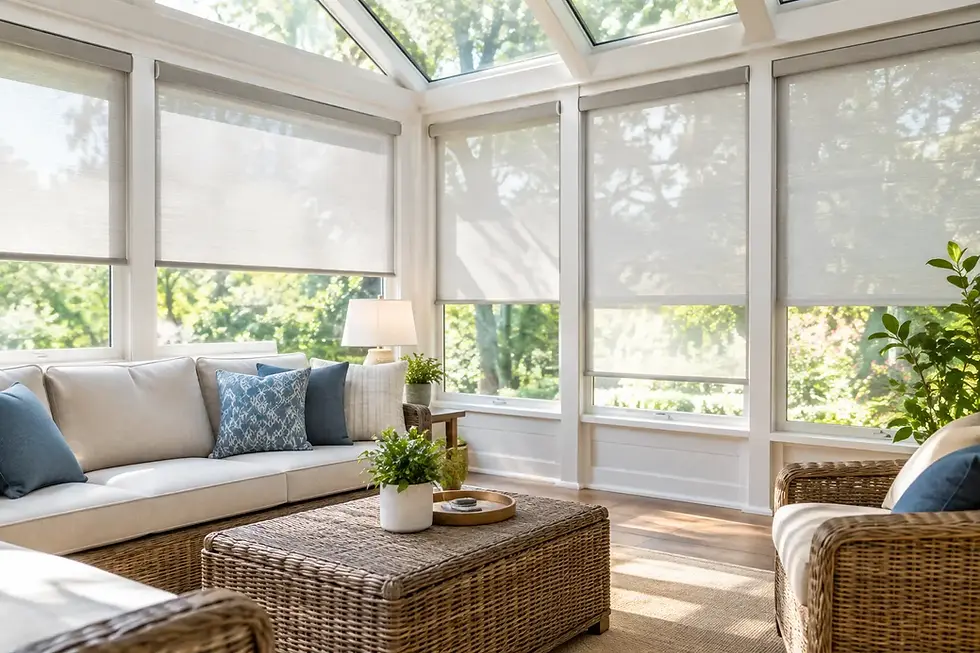
Motorized outdoor blinds are often the strongest choice for patios that already have a roof or overhead structure. They provide vertical protection at the open sides of an alfresco area, helping manage low sun, wind, rain spray, and privacy.
Zipscreen-style systems are especially effective where a secure, streamlined finish is required. The fabric runs within side channels, creating a taut screen that looks polished and reduces gaps at the edges. This makes them a practical option for coastal and regional homes where wind exposure can change quickly.
The fabric selection affects both the look and performance. A more open weave can preserve views and natural light while reducing glare and heat. A denser fabric gives greater privacy and stronger sun control. Neither is automatically better. If your outlook is a key part of the home, retaining that connection may matter more than complete visual screening. If neighbors overlook the patio, privacy may take priority.
Retractable motorized awnings
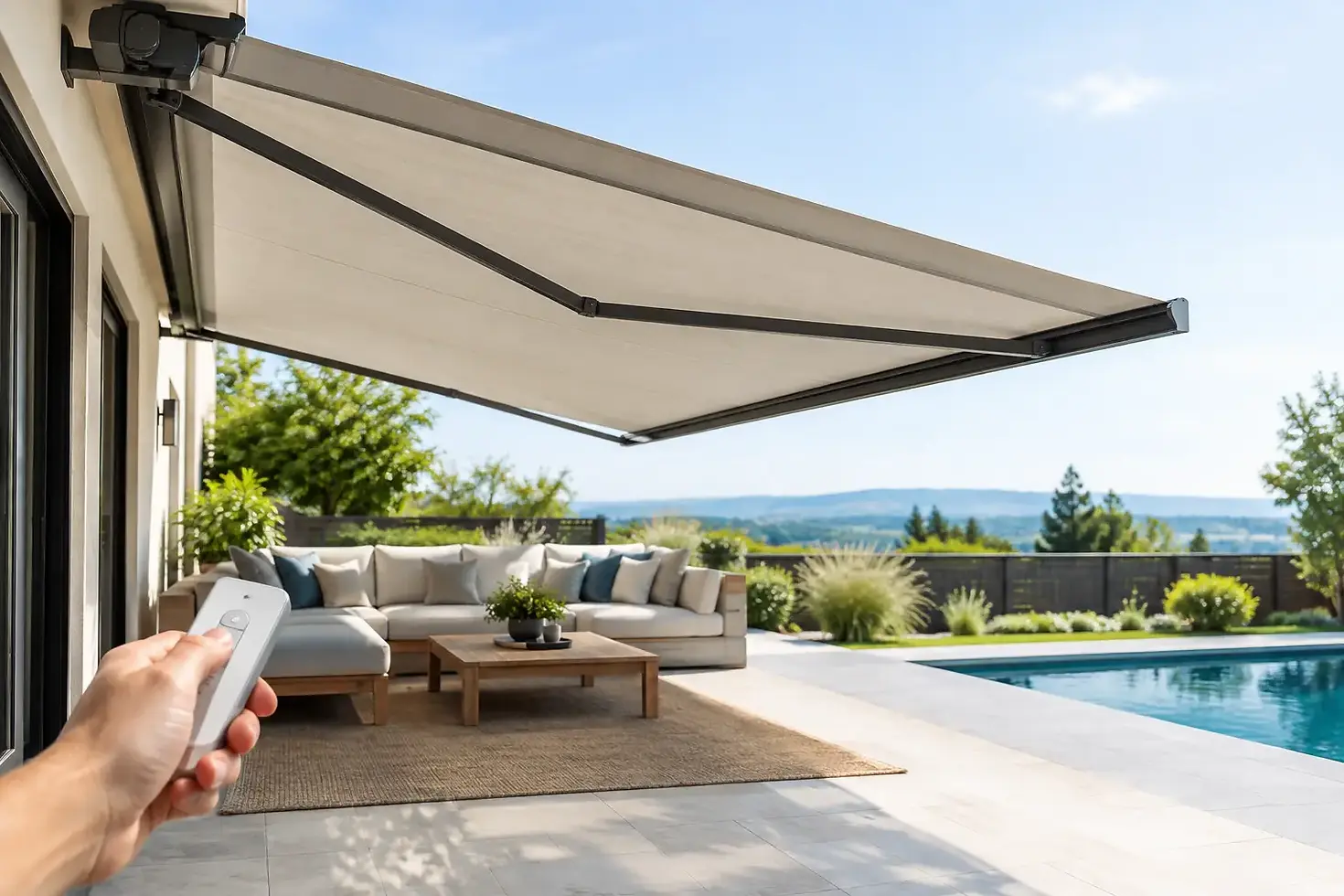
A retractable awning adds shade from above without permanently enclosing the patio. It is an excellent fit for open decks, poolside entertaining areas, and courtyards where a fixed roof is not desired.
The advantage is flexibility. Extend the awning when the sun is strongest, then retract it to enjoy an open sky in cooler weather or after sunset. It can make a west-facing patio significantly more usable, particularly where afternoon heat makes outdoor dining difficult.
However, an awning is not a complete weather enclosure. It offers overhead shade but does not stop low-angle sun, provide much privacy, or protect every side of the space from wind. Many homeowners achieve the best result by pairing overhead shade with motorized outdoor blinds where needed.
Motorized outdoor louvers
Outdoor louvers suit homeowners seeking a more architectural solution. Adjustable louvered roofing allows you to control sunlight and ventilation from above, creating a permanent outdoor room with a clean, contemporary appearance.
The ability to angle the louvers is the key advantage. You can filter harsh sun while maintaining airflow, open them for daylight, or close them when conditions demand greater protection. For a patio that needs to function as a genuine entertaining zone rather than an occasional fair-weather space, louvers can provide a high level of control.
The trade-off is permanence. Louvers make a stronger visual and structural statement than retractable systems, so their proportions, finish, drainage, and relationship to the existing roofline deserve careful planning. They are at their best when integrated into the design of the home rather than selected solely for shade.
Start with the conditions, not the product
Choosing automated patio shading begins with understanding what makes the space uncomfortable now. Sun direction is usually the first consideration. A patio exposed to late afternoon sun may need vertical screening as much as overhead cover, while a north-facing entertaining area may benefit from adjustable roof shading that still allows winter warmth.
Wind is equally important, especially in coastal locations such as Byron Bay, Kingscliff, and Burleigh Heads. A product that looks appropriate on a sheltered courtyard may not suit a more exposed deck. Professional assessment considers mounting points, span widths, fabric behavior, and the demands placed on the system in local conditions.
Then consider how the patio is used. A quiet morning coffee area has different needs from a large dining space used for weekend entertaining. Families may prioritize shade near a pool or play area. Property owners preparing for sale may focus on presentation and creating a stronger indoor-outdoor connection. The most successful installation responds to the lifestyle of the people using it.
What good automation should feel like
Automation should make the patio easier to enjoy, not add another device to manage. Controls need to be intuitive, reliable, and positioned where they make sense for daily use. A simple remote may be ideal for a single awning, while integrated controls can be worthwhile for a larger outdoor area with several blinds or a louvered roof.
For some homes, sensors add useful protection and convenience. Sun sensors can activate shade when glare and heat increase. Wind sensors can retract compatible awnings when conditions become unsafe. The right features depend on the product and site conditions, so automation should be specified as part of the whole system rather than added as an afterthought.
It is also worth thinking about the moments you want to improve. Do you want to arrive home and make the patio comfortable before guests appear? Would you like to reduce glare during late-afternoon meals? Do you need privacy at night without closing off the room completely? These practical questions lead to a setup that earns its place in everyday life.
Design details that protect the premium look
Motorization is only one part of a high-end result. Fabric color, frame finish, cassette style, channel design, and installation alignment all influence how the system looks from both inside and outside the home.
Neutral tones often blend into contemporary architecture and allow landscaping or views to remain the focal point. Darker mesh fabrics can provide strong outward visibility during the day, while lighter choices may better complement pale exterior finishes. The best selection is not simply the most dramatic sample in isolation. It is the one that works with roof colors, window frames, flooring, and the level of light in the space.
Professional measurement is essential because outdoor areas are rarely perfectly square. Small discrepancies in levels, posts, gutters, and existing structures can affect the fit and operation of a motorized system. Custom specification and professional installation help ensure the blinds track correctly, the awning sits cleanly, and the overall finish matches the standard of the home.
Plan for a patio that works beyond summer
It is easy to choose shading based only on the hottest weeks of the year. A better approach is to consider every season and time of day. In summer, you may need heat reduction and glare control. In cooler months, you may want to retain morning light, reduce wind, and create a more protected setting for long lunches or evening gatherings.
This is where flexible automated systems stand apart from fixed solutions. You can open the patio when the weather is ideal and add protection only when it is needed. That balance keeps the space feeling connected to the outdoors rather than closed in.
A considered automated shading plan gives your patio a new role: not a space you check before using, but a place that is ready when you are. The most rewarding next step is a site-specific consultation that treats shade, privacy, weather, and design as one decision - so your outdoor area feels as inviting as the rooms inside it.