
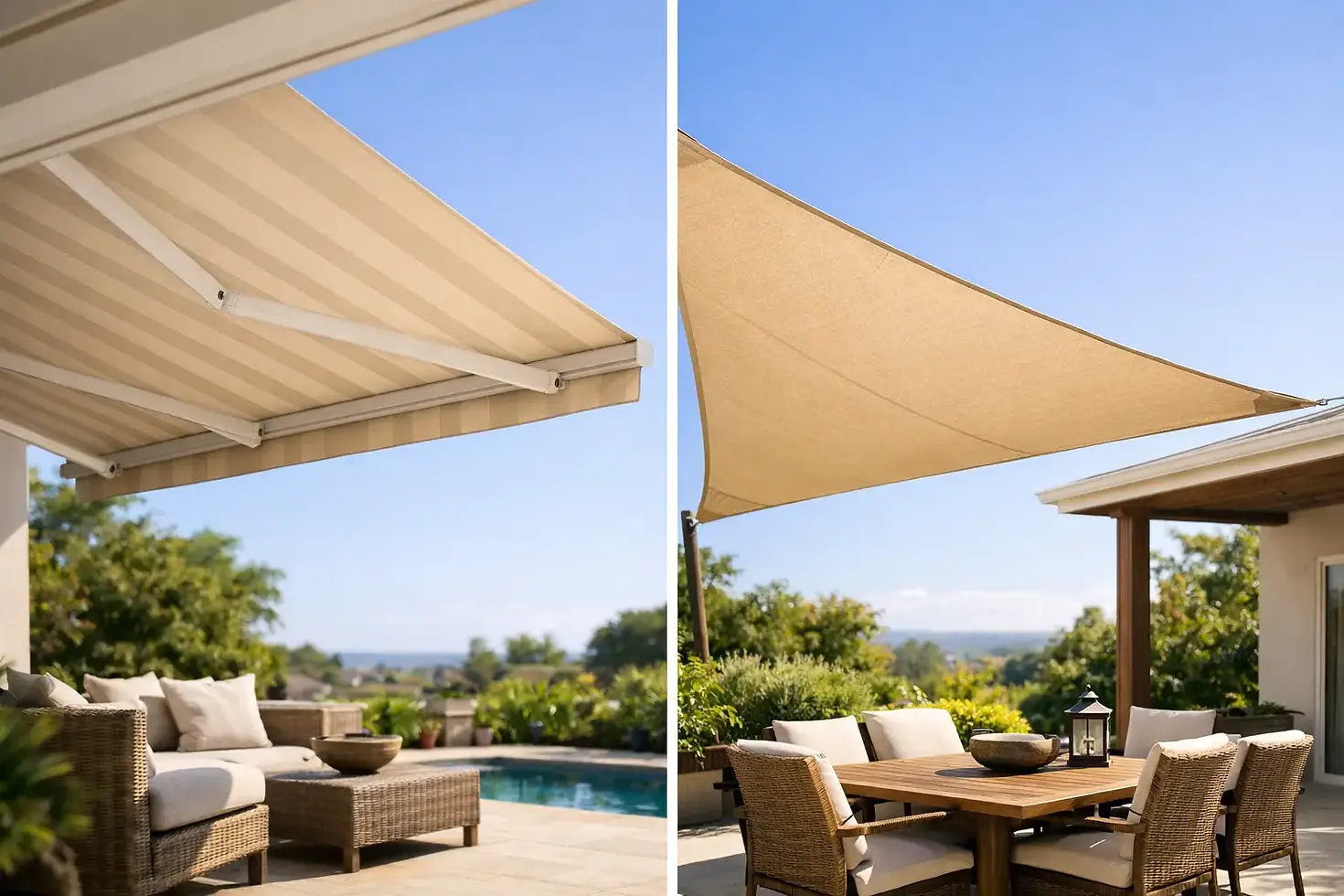
Retractable Awnings vs Shade Sails Compared
- Luxury Outdoor Blinds

- Aug 7
- 6 min read
A bright patio can look spectacular at midday and sit empty by lunch. When comparing retractable awnings vs shade sails, the real question is not simply which one creates shade. It is which solution gives your home a more comfortable, usable, and polished outdoor living area throughout the year.
Both options can reduce harsh sun exposure and improve the look of a deck, courtyard, poolside setting, or alfresco area. Their day-to-day experience, however, is very different. A shade sail is a fixed architectural feature, while a retractable awning gives you shade when you want it and open sky when you do not.
For homeowners who value flexible entertaining space, a cohesive exterior design, and professionally finished installation, that distinction matters.
Retractable Awnings vs Shade Sails: The Key Difference
A retractable awning is mounted to the home or a supporting structure and extends outward to cover an outdoor area. Modern motorized systems can be operated at the touch of a button, making it simple to adjust your environment as conditions change. When retracted, the awning folds away neatly, restoring sunlight, views, and a more open feel.
A shade sail is tensioned between fixed anchor points, such as posts, walls, or existing structural elements. It remains in place unless it is manually removed. Its angled, sculptural form can create an attractive visual statement, particularly over a pool or open garden area where there is no practical wall for an awning to attach to.
Neither is automatically the better choice. The right solution depends on how you use the space, the architecture of your home, the local weather exposure, and how much flexibility you expect from your shading system.
Choose a Retractable Awning for Flexible Outdoor Living
A retractable awning is often the stronger choice for patios and alfresco zones directly connected to the home. It extends your covered entertaining area without permanently changing the openness of the facade or blocking natural light from adjoining rooms.
That flexibility is especially valuable in coastal and regional settings. A clear morning may call for sunshine over breakfast, while a hot afternoon makes deep shade essential. Later, you may want the awning extended for dinner, then retracted to enjoy the evening sky. A fixed sail cannot make those adjustments.
Motorization adds another level of convenience. Rather than treating shade as a structure you must work around, you can make it part of how your home responds to the day. This suits households that entertain often, use their patio across different seasons, or want an outdoor area to feel like a true extension of the home.
Better control of sun and light
The sun does not stay in one position, so fixed shade can be highly effective at one time of day and less helpful at another. A retractable awning lets you decide when to shade the area and when to bring natural light back into your home and outdoor space.
This is also useful when protecting outdoor furniture and finishes from prolonged direct sun. You can extend the awning during the hottest part of the day, then retract it when full coverage is no longer needed.
A cleaner fit for patios and decks
Because a retractable awning is integrated with the home, it can create a more intentional connection between indoors and outdoors. Premium fabrics, cassette options, and streamlined hardware allow the system to complement contemporary coastal homes as well as more traditional properties.
The result is less about adding a cover and more about increasing your living space. A well-designed awning can make an exposed patio feel ready for relaxed weekends, family meals, and larger gatherings without overwhelming the architecture.
Practical rain protection, with conditions
Many retractable awnings can provide useful protection from light rain when installed at the appropriate pitch and used according to the product specifications. They are not a substitute for a fully engineered roof, and weather conditions should always guide how the system is used.
In strong winds or severe weather, retracting the awning is generally the sensible choice. High-quality motorized awnings can also be paired with wind sensors that retract the system when conditions become unsuitable, helping protect the investment and reducing the need for constant monitoring.
When Shade Sails Make Sense
Shade sails are often effective where there is no adjacent building wall to support an awning. Think freestanding pool areas, children’s play spaces, garden seating zones, driveways, or broad courtyards set away from the house.
Their greatest strength is reach. With properly positioned posts and engineered tensioning, a sail can cover a large or unusually shaped area that would be difficult to shade with a wall-mounted system. Multiple sails can also be layered at different heights and angles to create a bold architectural effect.
For properties with a casual, resort-inspired landscape design, that visual character can be appealing. A shade sail can frame a pool deck or outdoor lounge area while preserving the open-air feeling beneath it.
Fixed coverage comes with fixed compromises
The limitation is that the shade remains even when you would prefer sun. During cooler months, a fixed sail can reduce warmth and natural light in areas that might otherwise be enjoyable. It may also affect sightlines from upper windows or across a yard, depending on its placement.
A shade sail requires careful planning to avoid awkward angles, low edges, or posts that interrupt circulation around the patio or garden. The quality of the installation is crucial. Correct fabric tension, secure footings, drainage planning, and structural fixing points all affect both appearance and long-term performance.
Rain and maintenance considerations
Standard shade fabric is primarily designed for sun protection rather than rain shelter. Waterproof sail fabrics are available, but they need a carefully considered pitch so water drains properly. Poorly designed waterproof sails can collect water, sag, or place unnecessary pressure on fixings.
Because they are permanently exposed, shade sails can also require more frequent cleaning and inspection. Leaves, salt air, dust, and organic debris may collect on the fabric and around hardware. In high-wind areas, seasonal removal or additional maintenance may be appropriate depending on the design and product.
Style, Structure, and Property Presentation
The visual decision between an awning and a sail is often as significant as the functional one. A retractable awning tends to suit homeowners seeking a refined, integrated finish. It can maintain clean rooflines and keep the outdoor area adaptable for different occasions.
A shade sail makes more of a design statement. Its tensioned geometry can look striking when it is proportioned correctly and supported by well-positioned posts. On the wrong property, though, it can feel temporary or visually busy, especially if it competes with existing architectural features.
Consider what you want the area to feel like when the shade is not needed. If your priority is an uncluttered facade, open views, and the ability to bring sunlight back into the space, a retractable awning has a clear advantage. If you need permanent coverage over a detached zone, a shade sail may solve the layout more effectively.
Wind Exposure Should Shape the Decision
Wind is a major consideration for outdoor shading, particularly near the coast. No shading system should be selected based on appearance alone. Site orientation, surrounding buildings, elevation, and the way wind moves through the property can change what is appropriate.
Retractable awnings offer an important practical benefit here: they can be closed when weather turns. That does not mean they should be left extended in unsuitable conditions, but it does give homeowners more control.
Shade sails are designed to remain tensioned, so their engineering and attachment points must be suited to the site. A sail that is too large, poorly tensioned, or installed without adequate structural planning can become a maintenance concern. For exposed locations, professional assessment is essential rather than optional.
Which Option Is Right for Your Home?
Choose a retractable awning when your main goal is to enhance a patio, deck, or alfresco area attached to the home. It is particularly well suited to homeowners who want motorized convenience, variable shade, a premium integrated appearance, and the freedom to enjoy sunshine when conditions are right.
Choose a shade sail when you need fixed overhead shade over a detached area or an unusual footprint. It can be an excellent solution for poolside spaces and open yards, provided the design accounts for drainage, wind exposure, access, and long-term maintenance.
There is also room for both. A retractable awning can improve the main entertaining zone near the house, while a carefully designed sail can shade a separate pool or garden area. The strongest outdoor spaces are planned around how people move, relax, dine, and gather rather than around one product category.
A professional design consultation helps turn that planning into a solution that looks considered from every angle. Start with the moments you want to enjoy outside - morning coffee, long lunches, children in the pool, or evening entertaining - then choose the shade system that makes those moments easier to use more often.


